
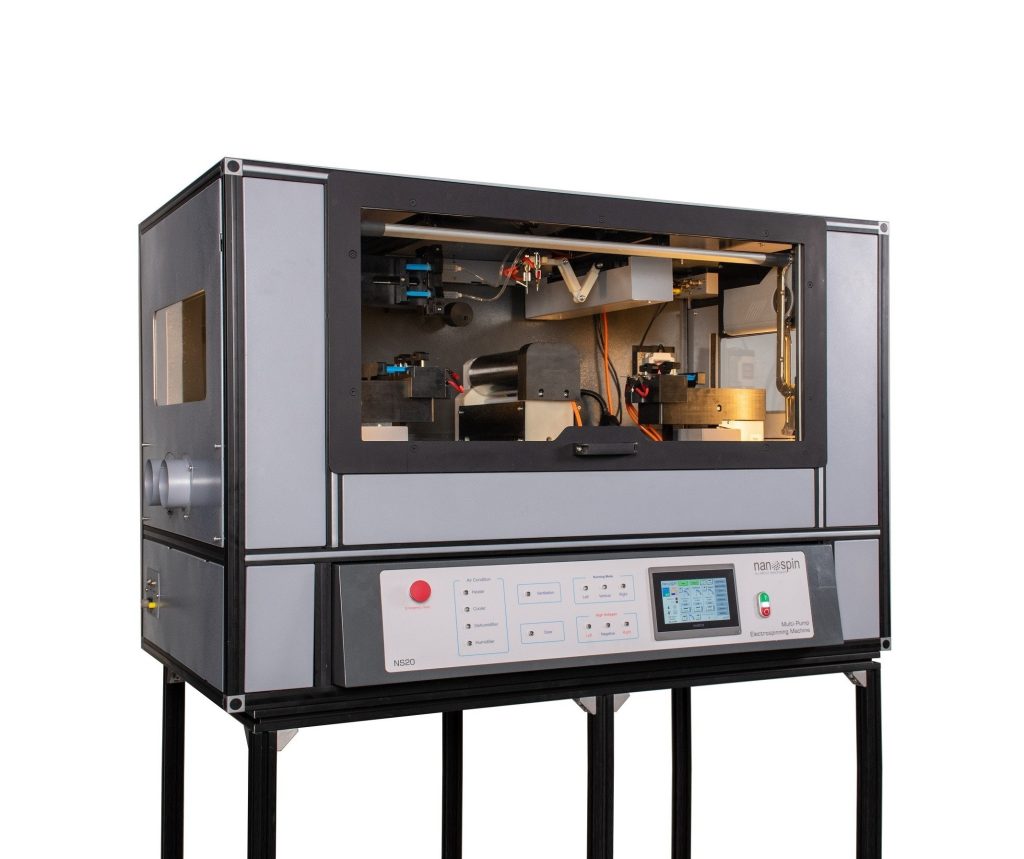
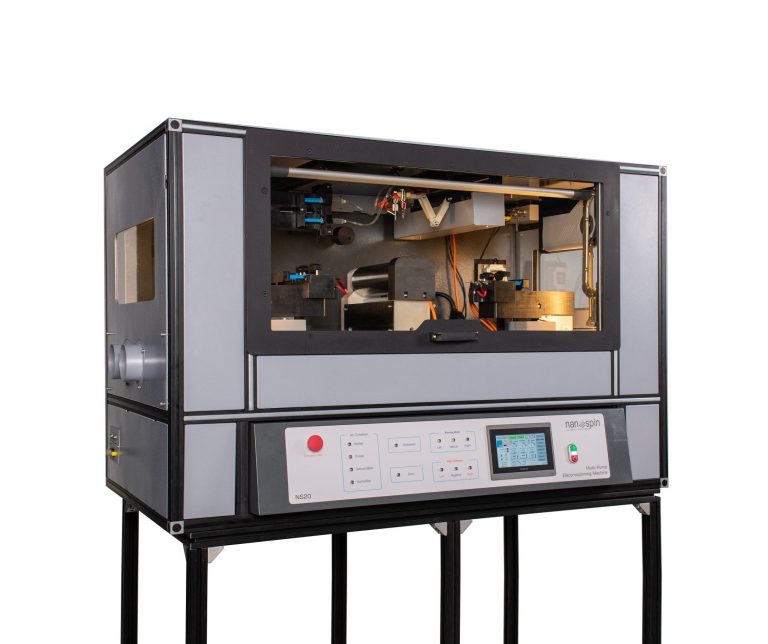
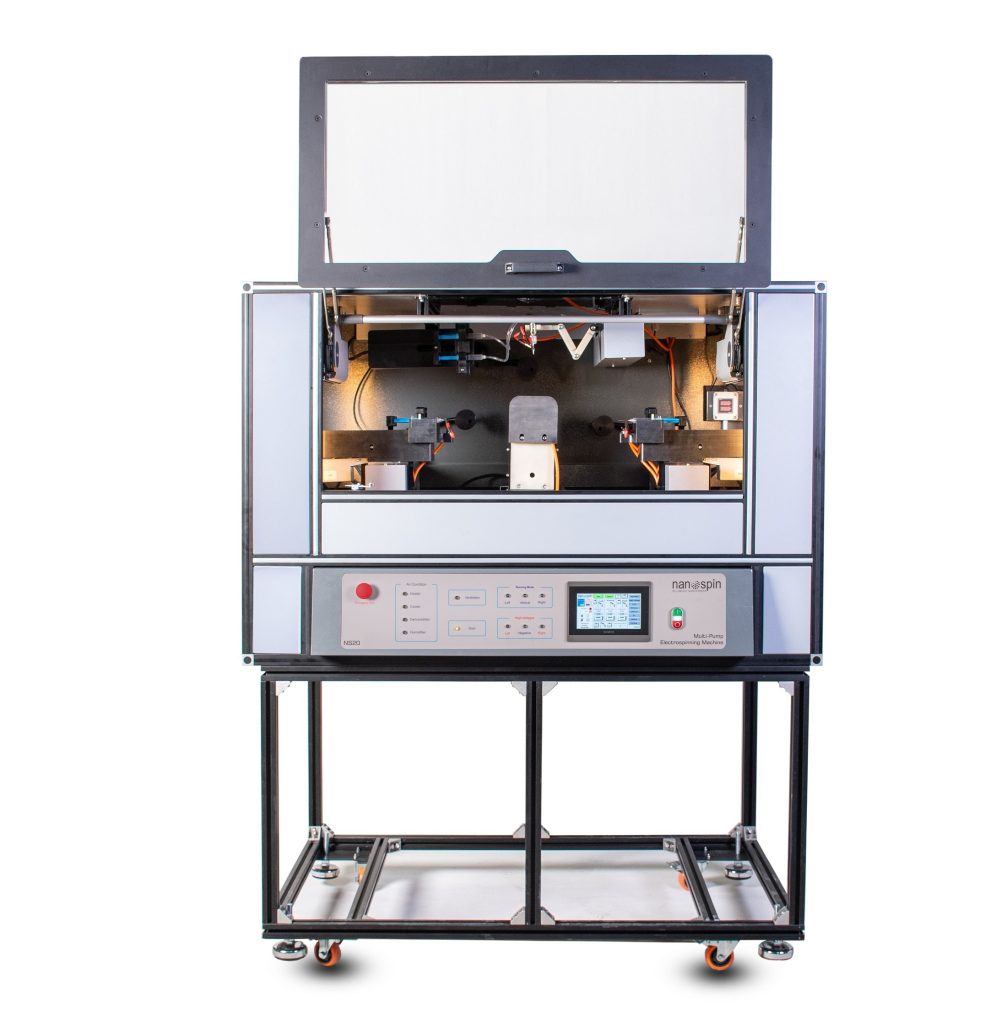
General
Main Control
Syringe Pump
Scanning System
High-Voltage Power Supply
Collector
Environmental Condition
Application
The NanoSpin 20 supports both electrospinning and electro-spraying, making it ideal for advanced material synthesis. For instance, a polymeric base can be electrospun from one pump while an additive, such as a drug, is introduced via electro-spraying from another.
 Tissue Engineering – Composite scaffolds and biomedical materials.
 Drug Delivery – Multi-material fibers with active pharmaceutical ingredients.
 Filtration Media – High-performance air and liquid filters.
 Advanced Material Synthesis – Functional nanofibers with tailored properties.
 Biological & Pharmaceutical Research – Coatings, membranes, and experimental materials. Catalysis – High-surface-area catalytic supports. Biomedical Research – Wound dressings, tissue engineering.
 Energy Storage – Battery separators and related materials.
 Nanofiber Sensors – Sensitive detection and measurement systems.
 Textile & Composites – Advanced fabrics and reinforcement materials.